Imagine you are moments away from being born.
You have no idea who your parents will be. You don’t know whether you’ll be born into wealth or poverty. You have no say over the country, neighborhood, or zip code where your life will begin. You don’t know your race, your gender, your sexual orientation, or whether your genes will predispose you to lifelong health or chronic illness.
Then, just before you’re born, you’re given a glimpse of Earth.
A wave of anxiety washes over you.
You realize that something as arbitrary as your zip code could determine how long you live.
You see that characteristics that should have no bearing on your worth—your race, gender, or sexual orientation—could nonetheless determine whether society treats you with dignity or suspicion, opportunity or exclusion.
You understand that if you’re born with a disability or a serious illness, many societies will leave you and your family to shoulder the burden largely on your own.
Now imagine you’re given one extraordinary opportunity.
Before you’re born, you get to rewrite the rules of society.
What would those rules look like?
How would you distribute opportunity, responsibility, and risk if you had no idea where you would end up?
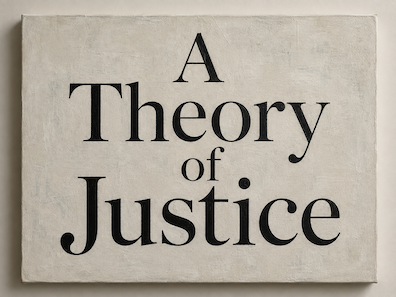
Some readers will recognize this thought experiment as an adaptation of philosopher John Rawls’ Theory of Justice, one of the most profound ideas ever proposed about what makes a society fair.
Rawls argued that the principles of justice should be chosen from behind a “veil of ignorance”—a position in which no one knows what place they will occupy in society. If you didn’t know whether you’d be born rich or poor, healthy or sick, privileged or marginalized, what kind of society would you create?
Unfortunately, those who are about to be born don’t get to write the rules.
Too often, the rules are written by those who already possess wealth, influence, and political power.
Power tends to reinforce power. Wealth often generates more wealth. Meanwhile, those with the fewest advantages find themselves even further behind.
Perhaps the most troubling consequence is that these unequal rules become invisible. They create the illusion that people who struggle simply failed to work hard enough or make the right choices, when in reality many began the race several laps behind everyone else.
So don’t stop at imagining the rules you would choose if you didn’t know who you were going to be.
Demand a society that reflects those principles.
Tell your elected leaders that no one should face diminished opportunities because of the family they were born into, the neighborhood where they grew up, the color of their skin, the body they inherited, or other circumstances they never chose.
After all, if we tell our children they can become anything they dream of becoming, shouldn’t we build a society where that promise has a genuine chance of being true?