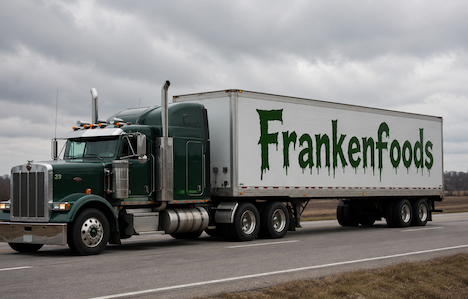
America’s food system is centered neither on health nor sustainability. It is not organized around providing people with healthy food grown in living soil or produced on well-managed pasture.
Much of what fills grocery store shelves today would be unrecognizable to our great-great-grandparents. Thousands of available products are less whole foods than engineered food-like substances, containing preservatives, emulsifiers, artificial flavorings, coloring agents, stabilizers, and even so-called “food glues” used to bind processed meats together.
On average, food travels roughly 1,500 miles from farm to consumer.
At the same time, an enormous portion of our food is never eaten. The USDA and EPA estimate that 30–40% of America’s food supply is wasted, with billions worth of food ending up in landfills each year. This waste is especially tragic given that millions of people in the United States and around the world continue to experience hunger or chronic undernourishment.
Meanwhile, some estimates suggest that 55% of harvested U.S. cropland is devoted to growing animal feed crops such as corn, soy, and alfalfa, a very inefficient use of land to feed humans in need of healthy food.
Too often, the true costs of our food system are externalized onto the soil, water, air, farm workers, rural communities, public health systems, and future generations. Within a genuinely holistic system, those costs cannot simply be pushed out of sight or absorbed by others.
This raises difficult but necessary questions.
Should truly nourishing food be priced in ways that fully reflects its real costs, even if that makes it more expensive? If so, should subsidies be redirected away from large industrial producers and toward low-income households to ensure access to healthy food?
Or should cheap, highly subsidized food-like products continue to dominate grocery store shelves while their real costs remain hidden in our environmental, economic, and public health systems? What other options are there?
How can we change our current food system so that it is more healthy and sustainable in the long term?