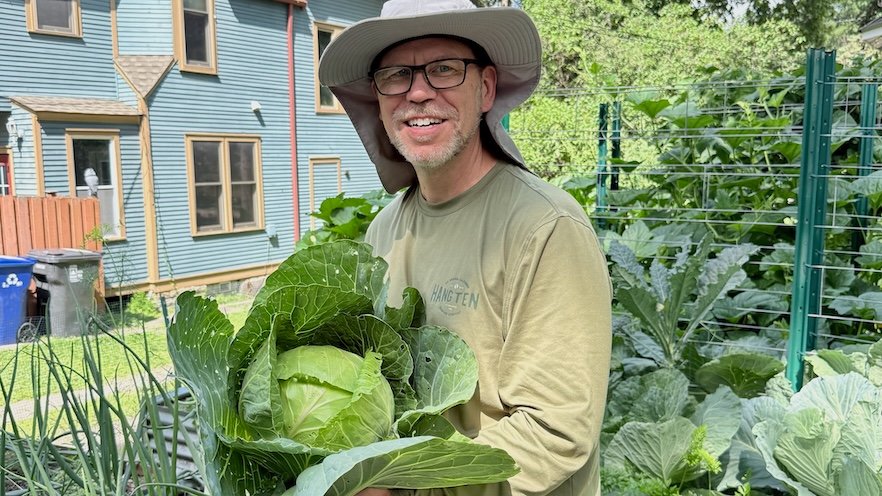
My gardening story is full of happiness, learning, and gratitude—but it begins with a terrible childhood experience.
The summer before kindergarten, I suffered a severe concussion that left me hospitalized for eight days. I don’t remember the accident itself, and no one found me for several hours. The assumption is that I fell from the outdoor staircase leading to my friend’s second-story duplex. My sister eventually found me rolling on the ground, mumbling incoherently.
The concussion left me with aphasia throughout my hospitalization. For eight days, I couldn’t speak intelligibly. I also lost much of my coordination—something I’ve never completely rebuilt. Even today, I’m clumsy with tools and rarely catch anything thrown my way.
As part of my rehabilitation, my doctor and my mom devised a simple therapy: picking tomatoes in our backyard garden. If I could grasp ripe tomatoes without bruising or puncturing them, it would show my coordination was improving.
Unfortunately, my first—and, for many years, last—experience in a garden ended disastrously. I stepped on an underground wasp nest. I don’t remember how many times I was stung, but I remember enough. For years afterward, I associated tomatoes with pain. I only somewhat jokingly referred to them as “devil’s apples,” borrowing the old historical nickname, and teased that tomatoes greedily insisted on being both fruits and vegetables.
Gardening returned to my life under very different circumstances.
After my parents divorced, my mom remarried, and we moved to rural Wisconsin. My second dad (I never think of him as my stepdad) worked hard, but his job didn’t pay a living wage. My mom stayed home to care for what had become a family with four children, and money was always tight.
Our garden wasn’t a hobby—it was a necessity. Along with berries and apples gathered from the woods, venison and grouse from my dad’s hunting, government surplus dairy products, and (periodically) eggs and goat’s milk, it helped feed our family throughout my childhood there. I worked in the garden and helped care for the animals, but at the time I viewed it mostly as another chore.
Everything changed during my final semester of college.
My honors thesis advisor, Professor Terrance Ball, had introduced me to the writings of the agrarian essayist, novelist, and poet Wendell Berry. Berry’s arguments for local economies, stewardship of the land, and understanding where our food comes from resonated deeply with me.
One day, I mentioned to Professor Ball that my first full-time job as an adult wouldn’t start until autumnn. He responded with what sounded less like a suggestion than an assignment: go home to rural Wisconsin, grow vegetables, gather fruit from the woods, and learn.
I asked my parents if they minded.
“Um…sure,” they said.
On weekends before moving home, I tilled two large garden plots and planted cool-season vegetables. Once I was back, I immersed myself in gardening, foraging, and preserving food. I spent countless hours reading my mom’s gardening and food preservation books. Rodale’s Gardening Answers and the third edition of Carol Hupping’s Stocking Up became my constant companions. My mom even spread the word about my summer project, and several friends donated surplus vegetables for me to preserve. By the time I moved back to Minneapolis, I had purchased a chest freezer and filled it with the fruits—and vegetables—of that summer’s work.
I’ve maintained a garden during most summers ever since.
Once I bought my home, gardening became a permanent fixture in my life, although not always an easy one. For years, a line of tall, spindly trees shaded my backyard while their invasive roots stole nearly all the available moisture and nutrients from my vegetable plants. Eventually, I removed them. And, I still contend with my neighbor’s black walnut tree, whose roots and juglone make growing vegetables nearby an ongoing challenge.
In 2013, Rebecca and I hired a landscaper to redesign our backyard with gardening in mind. More than half the yard was regraded to create a gentle slope, while the remaining section became a perfectly level space for a vegetable garden. The landscapers framed the area with cedar timbers, and I attached a three-foot-tall hardware cloth fence to keep out rabbits and other critters. Inside that enclosure, I built seven raised beds, each measuring six feet by four and a half feet and eighteen inches deep. I filled them with a rich blend of organic topsoil, compost, and composted horse manure, creating the foundation for the garden I still cultivate today.
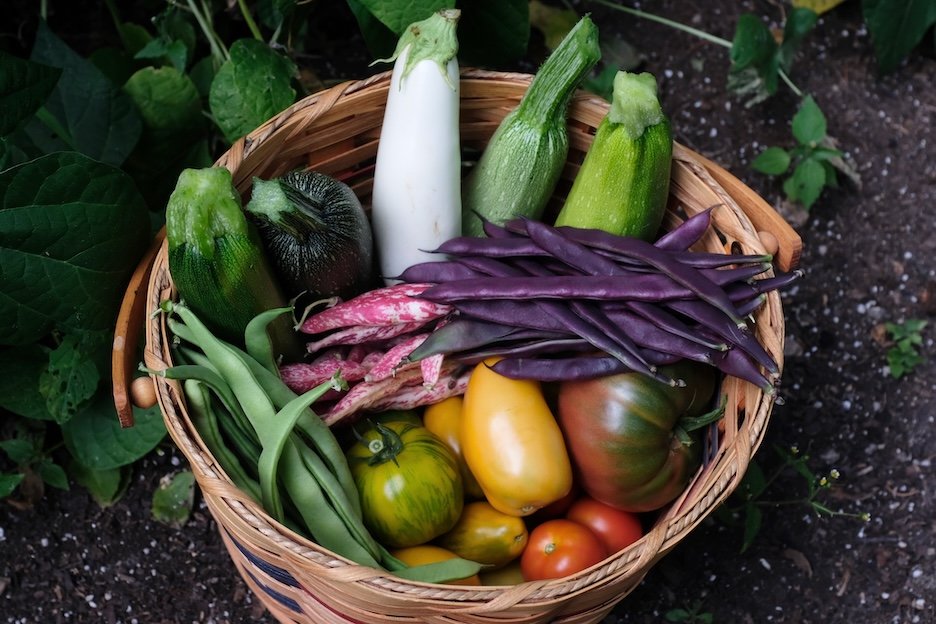
Around that same time, I committed fully to growing heirloom and open-pollinated vegetables.
I love the astonishing variety of colors, flavors, textures, and nutritional qualities that rarely make it into grocery stores. But my interest goes beyond taste. I’m increasingly concerned about the loss of seed diversity in modern agriculture.
History has shown that dependence on too few varieties leaves food systems vulnerable to disease and pests. Diversity isn’t just beautiful; it’s resilience.
That’s one reason I grow between 25 and 50 varieties of vegetables every year.
The little boy who once feared tomatoes now spends each growing season celebrating the remarkable diversity they—and so many other vegetables—have to offer.
This is a treasure Michael, thanks for sharing your garden history. I too grew up in rural WI, and as a little girl spent hours in berry patches with my mom and my Aunt. I mean we went and spent the whole day, brought lunch etc. Then went home and cleaned all the berries, and my mother would can, make berry sauce, berry jam, and a dozen berry pies that went in one of the big freezers! She also fished and of course we had cattle, chickens, and pigs. So we were quite self sufficient. My mother’s garden was huge, she had a green thumb. I’ve finally, mostly, conquered house plants, and a few perennials, it took forever! I’m terrified of pressure cookers, so I get a bushel of tomatoes, Roma usually, make tomato sauce and freeze it for winter. So I make do with preserving that way. You are truly the Master Gardener, nice to read the history!