After getting ready for the day, I again headed to Crustum Bakery and Cafe. There was a different barista, and, apparently, different musical tastes. Oh, well. I got my usual: an Americano accompanied by a savory pastry.
Yesterday, I had decided that today would be University Buildings Day. The tour guide from two days ago had encouraged this. She told us that many of the rooms looked as though they had been pulled straight from the Harry Potter books. So I found my way to the building she had shown us from the outside. I went in and was told I could take a picture of the library downstairs.
When I got there, though, I discovered that it was roped off, meaning a picture was all I was going to get. I had visions of myself reading one of my books while sitting at a long wooden table or curled up in one of those chairs made for studying. Oh, well. I’ll find that experience in another university building.
Mmmm. No.
I went to several buildings that looked as though they were part of the university, but the people staffing the entrances told me I wasn’t allowed inside.
No matter. I decided to intentionally get lost in Vilnius’s old town.
I turned down side streets, peeked into churches, and wandered into courtyards to see whether they were open to the public. I succeeded—spectacularly—at getting lost. For more than an hour, I had absolutely no idea where I was.
Eventually, though, one side street dumped me onto one of the city’s shopping corridors, Gediminas Avenue, near Cathedral Square. So I tried again on the other side of Pilies Street. This time, no such luck. I quickly found myself walking along the same route our tour guide had taken us two days earlier to show us some of the old town’s important sites.
So I decided to try getting lost in the Republic of Užupis. I knew this would be more challenging because the enclave is quite small.
What do you know? I still succeeded.
Pretty quickly, I had no idea where I was going. Michael can get lost with the best of them.
While in this state of “who knows where I am,” I decided to look for the souvenir shop that sells the Republic’s constitution and lets you stamp it like a passport. Boy, had I gotten myself turned around.
A side story: I said I could get lost with the best of them. This has been true for as long as I can remember.
When I was very young, my family traveled to Paynesville, Minnesota, to visit my Great Grandma Nehring. At some point, I was walking with my family when I decided it would be fun to close my eyes and twirl around a few times.
Then I opened my eyes.
I couldn’t find hide nor hair of my family.
I searched everywhere. Eventually, I realized that I was lost—in the small town of Paynesville!
After some time passed, I heard my parents calling for me from Great Grandma Nehring’s front yard. I was plenty embarrassed.
Anyway, back to Užupis.
Something important to know about me is that I have no problem asking for directions—even from people who don’t speak English when I can’t speak a lick of their language.
I came across a young Ukrainian (I think) couple standing near a wall displaying 44 translations of the Užupis Constitution. For several minutes, they tried to help me. I mimed stamping a passport. They pulled up Google Maps on their phones and tried to figure out where I needed to go. I thanked them for their efforts and moved on.
I approached more people until I found one of the women who had been on yesterday’s tour of Trakai. She was also trying to find the souvenir shop.
Perfect.
The two of us stayed together and asked person after person for directions. Eventually, we got lucky. We found the shop.
Of course, there had to be one more adventure.
While making our way there, I tripped on the uneven cobblestones and came within millimeters of a faceplant. My new friend asked several times if I was okay. It was not a pretty fall.
I assured her I was fine. I mean, I had a bruised ego and a bruised knee. But otherwise, I was alright.
In any case, we found the souvenir shop—only to discover that it wouldn’t open for another hour and fifteen minutes. My new friend had to leave to meet up with the others, so I found a coffeehouse where I could hang out until the shop opened.
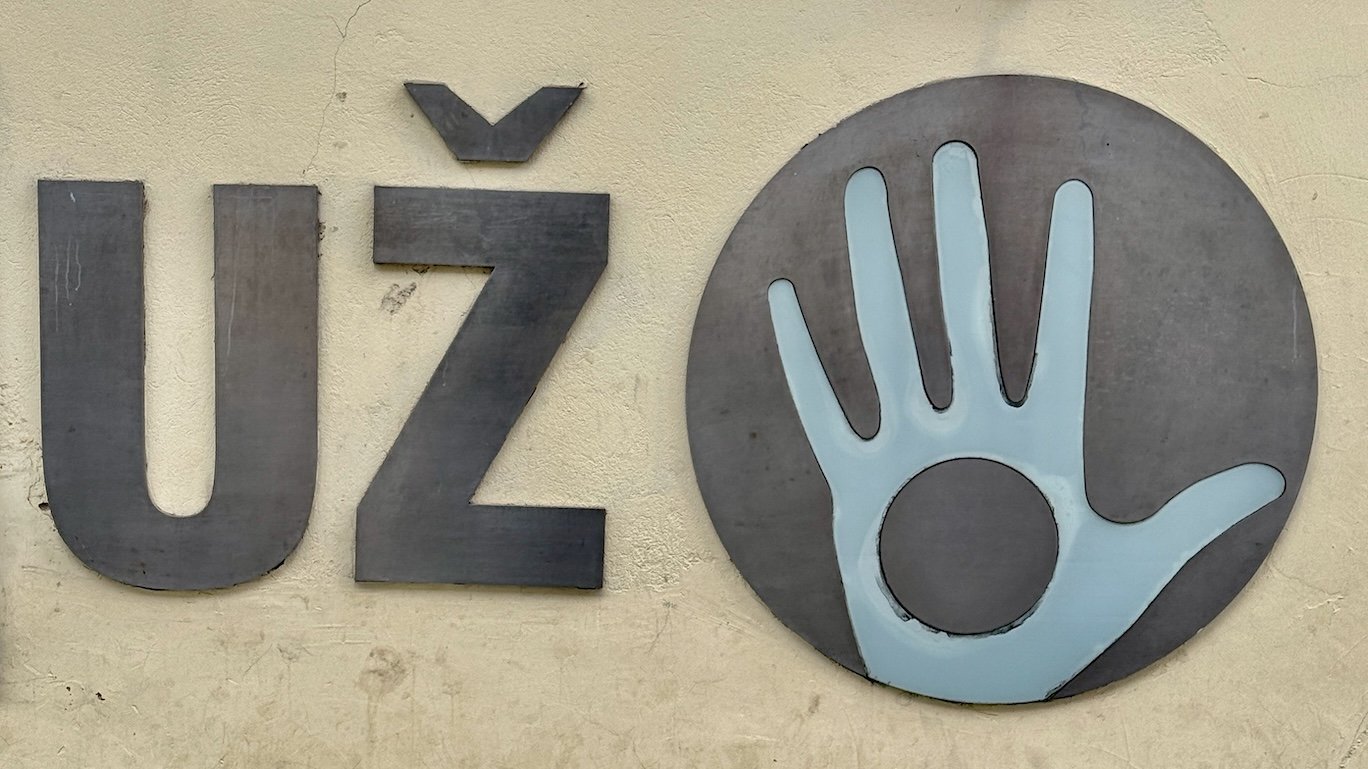
In addition to recording the morning’s exploits, I decided to look up the meaning of the Užupis flag. As shown in one of my pictures, it features an open hand with a hole in the palm. Known as the “Holy Hand,” Google says the symbol represents openness and tolerance—transparency, honesty, and a welcoming attitude toward travelers, free spirits, and the open-minded. It also represents the inability to possess or appropriate.
A core philosophy of Užupis is that you can live, love, and work there, but you cannot “possess” its values or its land.
Finally, the time came to get my stamped copy of the Užupis Constitution.
I bought a nice copy of this radical, 41-clause constitution. (Those seeing this on Facebook can read what I’m referencing here.) I also bought an espresso cup. On one side, it says, “Užupis so small.” On the other, it says, “There is space for all.”
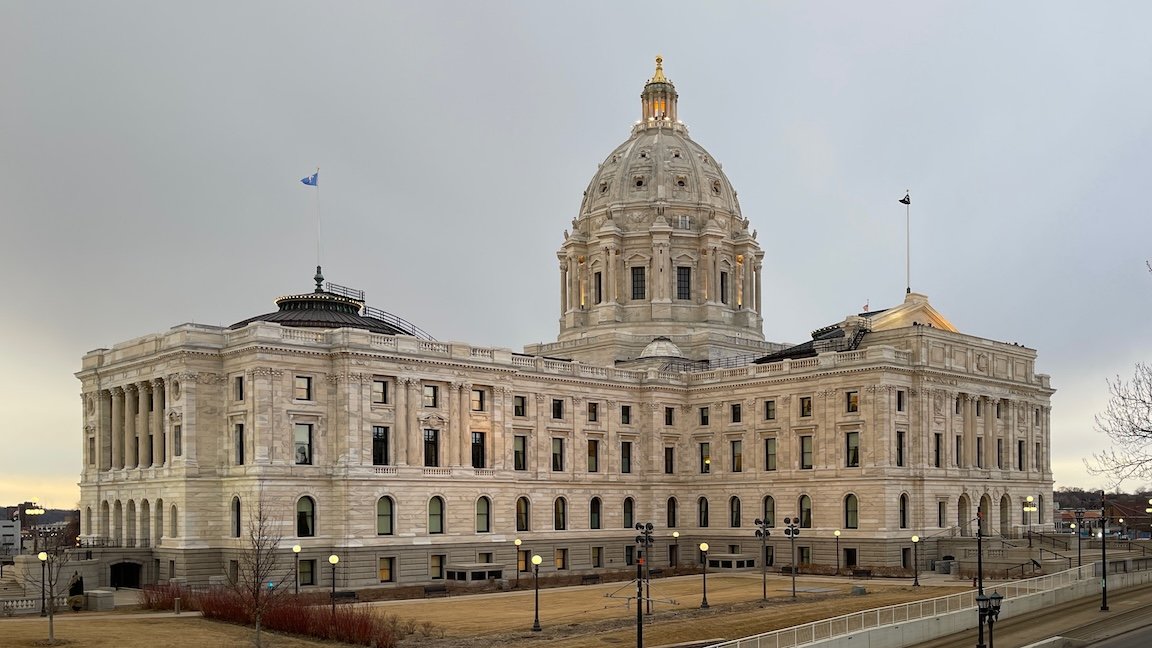
I wish more Americans would embrace that attitude toward people seeking asylum or simply seeking a chance to raise their families free from want.
Lastly, a word about some of my pictures.
I have a thing for photographing places of worship. But, as many of you know, I am an atheist. So what gives?
I cherish the value of reverence.
Places of worship are, at least in concept, places where people gather to revere something greater than themselves—to acknowledge and honor a higher power. I don’t share that belief. I don’t believe there is a higher power to revere. But I do find something beautiful in people who devote themselves to love, compassion, and service—especially when that love extends to the stranger. The devout believers who genuinely live those values are good people in my book.
I want more of us to revere the land—the soil beneath our feet—and the environment more broadly. I wish we had greater reverence for one another, for our relationships, and for the work we do to understand each other.
And, in keeping with the words on my new espresso cup, I want us to revere the stranger.
The stranger who has worked so hard to make a living here for themselves and their family.
The stranger who has escaped a place that wanted them dead because of what they believed.
What would you do to save your family from extreme want?
What would you do if your country no longer respected your closely held values and wanted you gone?
These are the stories of so many migrants and immigrants in America. And if you are not an immigrant yourself, many of us know that our ancestors came here, too—ancestors who were ridiculed, feared, excluded, or treated as though they didn’t belong.
I am in awe of the people who have struggled to make it here.
And I would love to revere an America that holds these values, too.